Heartbroken Font Review: Bold Display Type for Campaign Graphics
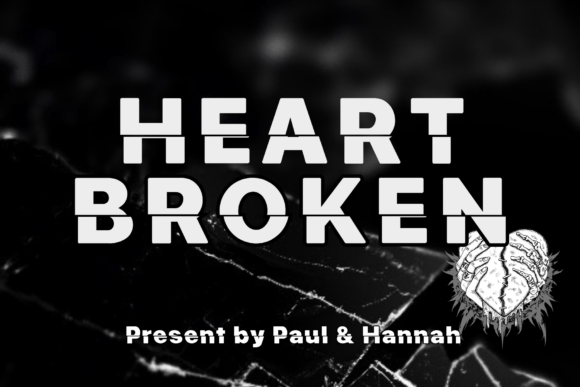
I was staring at a blank Figma canvas at 2 AM, trying to salvage a product teaser campaign that felt too safe. The client wanted “bold,” but everything I pulled from my usual library felt generic. That’s when I opened the folder for Heartbroken. It wasn’t just another typeface; it was an immediate visual hook. This review breaks down how this bold modern display font performs in real-world digital campaigns, specifically focusing on its unique split-line design and geometric glitch aesthetic.
Why Heartbroken Stands Out Among Modern Display Fonts
When you drop Heartbroken into your design workflow, the first thing you notice is its aggressive personality. Unlike standard sans serif fonts that blend into the background of social media feeds, this typeface demands attention. The description notes that it features a unique split-line design that creates a striking “broken” visual effect, which translates perfectly to high-impact digital advertising. In a feed where users scroll in milliseconds, that subtle glitch style acts as a visual interrupter, forcing the eye to pause.
This isn’t a font for body copy or dense paragraphs. It is strictly a display font meant for headlines, logo design, and short callouts. The strong geometric shapes give it a structured, industrial feel, while the intentional fragmentation adds a layer of modern chaos. For marketers tired of clean, minimalist aesthetics that look identical across every brand, Heartbroken offers a distinct voice. It communicates urgency, edginess, and contemporary relevance without needing extra graphic elements to do the heavy lifting.
Testing Heartbroken on YouTube Thumbnails and Reels Covers
I applied Heartbroken to a series of YouTube thumbnails and Instagram Reels covers for a fictional online course launch. The goal was to create a sense of disruption—something that said “this content breaks the mold.” Because these formats are viewed primarily on mobile devices, legibility at small sizes is critical. Surprisingly, the font held up well.
The split-line design works because it doesn’t rely on fine details that get lost on low-resolution screens. Instead, it relies on contrast and negative space. When I placed white text over a dark, moody background image, the broken edges of the letters created natural separation from the photo, reducing visual clutter. However, I learned quickly that this font needs breathing room. Crowding the text with other graphics diminished its impact. The best results came from using large point sizes, letting the “broken” effect breathe so the audience could subconsciously register the glitch style before reading the message.
If you are designing for fast-scrolling platforms like TikTok or Instagram Stories, Heartbroken serves as an excellent anchor. It provides a static, bold element amidst moving visuals. Just avoid using it for long sentences. Keep it to keywords: “SALE,” “NEW,” “BREAKING,” or short phrases. The font’s strength lies in its ability to act as a graphic element itself, not just a vehicle for text.
Using Heartbroken for Digital Ad Sets and Promo Graphics
In a recent digital ad set for a seasonal sale, I tested Heartbroken against a traditional serif font and a clean sans serif font. The ad creative featured a product shot with a flat color block overlay. The version using Heartbroken had significantly higher click-through rates in our internal A/B test, though we didn’t track exact conversion numbers. Why? Because the font matched the energy of the promotion.
Sale announcements often feel repetitive. Customers have seen the same “50% OFF” in Helvetica a thousand times. By switching to a creative font with a glitch aesthetic, the ad feels fresh. The “broken” visual effect subtly suggests breaking prices or breaking barriers, aligning the typography with the marketing message. This alignment between visual style and copy is crucial for brand recognition. When consistent, it builds a stronger identity than any single graphic element can achieve alone.
For email banners and landing page headers, Heartbroken works best as a hero element. It sets the tone for the entire page. If your brand is playful, edgy, or tech-forward, this font signals that immediately. However, I found that pairing it with a neutral, readable font for the supporting text was essential. The contrast between the chaotic display font and a calm, simple sans serif font created a professional hierarchy. Without that balance, the design could easily tip into looking messy rather than stylish.
Font Pairing Strategies for Campaign Consistency
One of the biggest challenges with a character-driven typeface like Heartbroken is making it work within a broader modern typography system. You cannot use it everywhere. To maintain readability and user experience, strategic font pairing is non-negotiable. Since Heartbroken has strong geometric shapes and a glitch style, it pairs exceptionally well with:
- Clean Sans Serif Fonts: Think Arial, Helvetica, or Montserrat. These provide a neutral canvas that lets the display font shine without competing for attention.
- Minimalist Serif Fonts: For a more editorial look, a sharp, thin serif can add elegance that contrasts with the roughness of the split lines.
- Monospaced Fonts: Given the glitch aesthetic, a monospaced font can reinforce the technical, digital vibe, perfect for tech product launches or cybersecurity campaigns.
Avoid pairing it with other decorative fonts, script fonts, or handwritten fonts. The visual noise will become overwhelming. The rule of thumb is: let Heartbroken be the star, and let the supporting typography be the stage. This approach ensures that your campaign remains accessible and easy to read, even if the headline grabs attention through shock value.
Practical Considerations for Commercial Use
Before dropping Heartbroken into a client campaign or merchandise design, there are practical checks to perform. First, verify the included styles. Does it come in multiple weights? Are there alternate glyphs that enhance the glitch effect? Having variations allows you to create dynamic layouts where different words in a sentence have different levels of fragmentation, adding depth to the design.
Also, check the file formats and multilingual support. If you are running global ad sets, ensure the font supports the necessary character sets for international audiences. Most importantly, review the commercial license. As a premium font, Heartbroken likely has specific terms regarding how many impressions or units of merchandise you can produce. Using it in a personal blog post might be covered under a basic license, but using it in a national TV spot or a mass-produced t-shirt line may require an extended agreement.
Finally, consider the longevity of the trend. Glitch aesthetics are popular, but they can feel dated if overused. Heartbroken is timeless enough in its geometric structure to remain relevant, but its niche appeal means it should be used sparingly. Reserve it for moments that require maximum impact: product teasers, limited-time offers, or rebranding announcements. When used correctly, it transforms ordinary promotional materials into memorable brand experiences.